Showing posts with label For Kids. Show all posts

Thursday, October 4, 2012

THE SHEEP WHO THOUGHT THEY WERE COWS


By Dr. Robert E. Plucker


            When I was about 10 or twelve years old, my Dad had sheep on his farm.  There must have been about twenty-five or thirty of them.  Each spring lambs would be born, and as sometimes happens, one or two of the mother sheep would refuse to take care of their babies.  Dad would usually give these poor little lambs that their mothers didn’t want to my sister and me.  We would feed them with baby bottles (left over from when my little sister still drank from a bottle), and keep them warm, and when they got a little bigger, make pets out of them.  Mom wasn’t always too pleased to have one or two miserable, starving, cold little lambs in the house, warming on the oven door, but she couldn’t bring herself to throw them back out into the cold, and it usually took only a day or two to get the lambs strong enough to take back outside.  But their sheep mothers never took them back, and so we would have pet lambs that would follow us all over the farm yard like puppies and we grew quite fond of them.   

            My Dad’s sheep caused some trouble, as they were always breaking out of the pasture where they were supposed to stay, and running down the road.  Dad finally lost his patience with them and sold the lot of them except for the four baby bottle lambs that my sister and I had raised.  By this time, of course, they were grown up sheep and no longer were the cute little pets we used to have.  But we still liked them and Dad said of course he would not consider selling them.

            So he sold the other sheep, and one morning a truck came and we loaded them aboard for their new owner to take away.  When the truck left, the four sheep that were not sold had to go into the pasture with the cows.  When they came home from the pasture, they had to go into the barn with the cows.  They drank from the same water tank; they ate the same grass, hay, grain, and whatever food the cows ate.  They were always with the cows and began to think that they were cows.

This went on for several years until my Dad decided that he missed having the sheep.  He liked to watch the lambs play in the spring and he even liked the shearing of the wool off the sheep in the spring, which is really a rather hard, dirty, greasy job.  He liked the money he got from selling the wool, too.  So he decided that he would buy some sheep.  He advertised in the newspapers and finally found a sheep farmer who would sell him about thirty-five sheep.
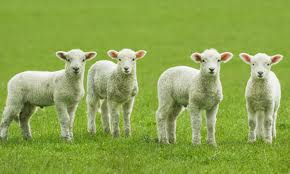
Very soon after this, a truck came, unloaded the sheep and drove away.  The new bunch of sheep, glad to be off the truck which they had not liked at all, began to explore the farmyard and the pasture where they were to spend most of their time. 
 
They seemed to be as happy as a sheep can get over this change in their lives, but the four sheep that we still had left over from their bottle-baby days did not like this arrangement at all!  They were not sheep.  They were cows!  They would not join the new sheep in the pasture, in the barn, at the watering tank, or anyplace.  In their little sheep minds they were cows until they died.
 
Photos:
SHEEP:  en.wikipedia.com
LAMBS:  guardian.co.uk


Friday, September 28, 2012

TWO CALAMITIES IN 1932


By Dr. Robert E. Plucker 


This story took place so long ago that I am not sure that I remember everything exactly.  I was not quite five years old at that time, but I remember the things in this story because they were terrible calamities in my mind and I had no idea that anything like this could happen.  Five-year-olds don’t have a lot of experience with calamities, usually.  It was Election Day, 1932.

A President of the United States is elected only once every four years, and my Dad and mother believed that it was important to vote for the man who was to be the leader of the nation for the next four years.  My Dad was a Republican all his life and believed in voting for the Republican, no matter what else he was.  Mom wasn’t so sure that the Republicans always had the better man as their candidate.

We lived on a farm five miles from the town where Dad and Mom were to vote.  So on Election Day we all piled into the old 1924 Dodge car – Dad, Mom, my sister, Dots and I.  We had some eggs in a big thirty-dozen case and some chickens in an old twine sack in the car too, stuffed into the back seat with Dots and me.  The chickens and eggs were for trading at the store for groceries, as we had very little money, but we did have the chickens and the eggs.  All the farmers did that in those days.

We were also going to stop at Grandpa’s house to get the old 1921 Model T Ford truck that Grandpa and Dad shared for hauling grain and different odd jobs.  Dad was going to drive the truck home and Mom was to take the car, with us two kids and the groceries that we got for the chickens and eggs.  (Someday, perhaps, I’ll write a story about going out to the chicken house on a cold dark night with Dad, a flashlight, a chicken hook, and a sack or two.  The chickens would be asleep and Dad would hook them with his long wire hook around one leg and drag the sack open so he could stuff in the chicken.  And then it was my job to hold it shut so the chicken would have to stay in the sack.  The trick was to keep the first chickens in the sack while holding it open for each of the rest of the chickens.)

It had been half-decent weather when we left home, but while we were in town the thin clouds got thicker, it got colder, and it started to rain and snow at the same time.  By the time the voting, the grocery-trading and the stopping at Grandpa’s to get the truck were all done, it was muddy, slippery and cold; ice started to form in the puddles.  The roads were all soft, sticky mud, no gravel on them except in town, and certainly no concrete or asphalt the way roads are made today.  It was scary to think about driving through all that mud and freezing rain and snow on a slippery dirt road that had deep, deep ditches on both sides full of water in the low places.

The first calamity happened in the car on the way to Grandpa’s.  Dad asked Mom who she had voted for, thinking that of course she would have voted for Mr. Hoover, the Republican candidate.  Because, of course he had voted for Hoover.  But horrors, no, Mom said she had voted for Mr. Roosevelt, the Democrat.

“What?” bellowed Dad, “you voted for that Democrat?”

He said “Democrat” as if it were a dirty word, because for him it was a dirty word.  He was outraged and told her so in a loud voice that scared me and my sister.  We had never heard Mom and Dad fight before, and didn’t know that it was possible for any Mom and Dad to even disagree, much less actually yell at each other.  We were horrified, and, of course, we added to the general distress by yelling and crying ourselves.  Dad, already very short on temper, was thinking about spanking all of us, but as he could hardly have done so to Mom, he got control of his feelings and only grumped the rest of the way to Grandpa’s house.
Herbert Hoover,
Republican
Franklin Roosevelt,
Democrat


Hoover congratulates Roosevelt after the election.

 The second calamity came on the way home.  Mom was driving the car with the kids and groceries, slipping and sliding through the rain, mud, ice and snow.  Dad was quite a distance behind in the Model T truck.  Mom got safely out of town where there was at least some gravel on the roads, but she was no more than half a mile onto the country dirt road when the front wheels of the car got into a rut that was rather crosswise on the road.  This threw the car out of what little control she had over it even at the low speed she was traveling.  Slip, slide, kerplunk, BASH!!  Into the deep ditch we went.  You should have heard the yelling and crying and screaming that my sister and I carried on!  Anyone who had happened to come past would have thought we had broken all our arms and legs and maybe a rib or two.             

Poor Mom’s nerves must have been terribly frazzled after having had the fight with Dad, then to be all nervous about driving home in all the mud, ice and snow, and finally to have these two hysterical kids having a fit in the back seat of the car.  She’d have been a good bit better off if she had left us at the grocery store and taken the chickens back with her.

But here’s the happy ending.  Dad came along soon with the truck.  The truck had chains on the driving wheels, but the car did not, and so when he saw that the car was in the ditch and couldn’t be driven out, he got out his towing chain, hooked on to the front of the car and yanked it out of the ditch with the truck.  It didn’t take long at all and was not that much trouble, especially after he got us kids quieted down.  Of course, by this time we were yelling just because it seemed like the thing to do; we weren’t hurt or anything like that.  Dad gave us one of his famous looks, and we knew right away that we had better keep quiet and out of the way.  He and Mom must have made up their fight, because I remember him kissing Mom, but he still wasn’t at all pleased with the way my sister and I had made such a fuss.


PHOTOS:
Wikipedia

Thursday, September 27, 2012

THE SHEEP, THE DOG AND DAD'S WHISTLE


By Dr. Robert E. Plucker 


Sheep are nice enough animals, but they are not at all smart.  They do things because their sheep leader does them first.  Mostly the leader only does things by habit because he or she has done these things before, and once the leader has formed the habit, it is nearly impossible to change it.

When I was in high school, my Dad had raised sheep on his farm for a number of years, and like most sheep, they liked to get out of their usual pasture and go for a nice walk down the road.  They would amble down the driveway, turn right, and head for the church which was only a quarter of a mile away.  They would eat the grass and weeds growing at the side of the road, but my Dad worried that a car would come speeding along and bash into them.
Dogs are handy animals to have around a farm because they help ever so much in making cows and sheep go where they are supposed to.  They also help in making the cows and sheep return to wherever it was they sneaked out of.  My Dad had a dog that would go and fetch the sheep from the church (I really don’t know what attracted them to the church) whenever he gave a special whistle.  He didn’t whistle through his fingers the way you may have seen people do, but it was extremely loud and piercing.  The dog would go zooming over to the church after the sheep, round them up, and chase them home at a fast gallop.  My Dad could relax on the front porch while all this chasing was going on.  This whistling-for-the-dog-to-chase-the-sheep trick went on for several years.  The sheep never learned that it was no use to run to the church because surely the dog would come to chase them back home.

Dogs don’t live very long, compared to humans, and after not too many years, my Dad’s dog died of old age, happy and contented that he had worked hard and done his duty as long and as cheerfully as he could.  My Dad, who never lied, always said that that dog laughed a lot.  But the sheep, creatures of habit, never noticed that the dog was dead.  They continued every now and then, to get out of the pasture, amble down the driveway, turn right and head for the church.  When my Dad would see them, he would give his loud whistle, and the sheep, sure that the dog was hot on their heels, would gallop back to their pasture.  This went on for years.

Sheep don’t live long, either, and it happened that every single sheep in my Dad’s small flock had been replaced by the time I had started college.  They had died, and been replaced by their lambs, or they might have been sold and replaced by other sheep, but there was not one sheep left that had ever personally seen the dog that had chased them years before.  But still, every time they ambled down the driveway, turned right and started running for the church, my Dad would whistle his special loud whistle and the sheep would all come charging home, sure that the dog, whom they had never met, long since dead, would come after them and nip at their heels.


Photos: https://www.google.com/search?q=sheepdog&hl=en&qscrl=1&rlz=1T4AURU_enUS501US501&prmd=imvns&tbm=isch&tbo=u&source=univ&sa=X&ei=uStaUNi6G9Cu2gXU9IDoBg&sqi=2&ved=0CDoQsAQ&biw=1600&bih=718

Monday, September 24, 2012

THE NEW TRACTOR


By Dr. Robert E. Plucker 


            About the time I was in third grade, we had a terrible rain and hail storm in the early spring.  Two of my Dad’s best horses were killed in that awful storm, and it was hard for him and the remaining horses to do the farm work for the rest of the summer.  So Dad tried to make it easier on the horses by getting a tractor to do the heavy work.  He had so little money in those days that all he could afford was an old worn-out Parrott tractor.  It was a gigantic thing with steel wheels that were higher than a man’s head.  Of course it had no rubber tires.  It took terrific power just to move the heavy tractor by itself, and so when it came to pulling a plow, there was hardly any power left, and the tractor was mostly a very large failure.  He used this monster machine for about two trouble-filled years before he gave up on it.
Rock Island Tractor

            My Dad had saved up a little money by this time and was able to buy a very good used Rock Island tractor.  This was also a steel-wheeled affair that was a fine tractor for plowing and other very heavy work, but could not be used in the cornfields because the wheels were so wide and badly spaced that they would tear out or bury most of the rows of little corn plants if you tried to use it in the cornfield.  But it was a fine tractor, and my Dad hated to have to sell it several years later when he decided that his horses needed to be retired to the pasture, and that the cornfield work would have to be done by a new “row-crop” tractor.

            He sold the Rock Island in the winter, and so he had some time to shop around for the new tractor before the spring field work had to be done.  He and I went to Chancellor, only four miles away, to look at a new Case Model VC tractor, small and bright orangey-red.  I liked this tractor a lot; it was small enough so I thought I would be able to drive it, and of course it had the wide rear wheels and narrow front wheels that you must have for corn-field work.  It also had rubber tires, which made it ride much easier than the old steel-wheeled machines that my Dad used to let me ride on while he drove.  I thought surely he would let me drive this new one.  After all, I was in seventh grade by this time.

            I was terribly disappointed when he decided that the Case was too small and would not be able to finish the work fast enough.  Then I thought maybe I could get him to buy a nice green and yellow John Deere, but he said he would not be able to get used to the sound of the two-cylinder John Deere engine (“pud-up, pud-up, pud-up”).  How about a nice bright red Farmall?  Nope, operated clutch was much safer for a tractor, and all you had to do was put it in gear, and when you wanted to go ahead, you pushed the clutch lever ahead, and when you wanted to stop, you pulled it back.  And besides, his beloved old Rock Island tractor had a hand clutch.

            It was getting close to spring planting time, and Dad had to do something, so one day he and I went to Lennox to look at a Minneapolis-Moline Model R.  This had to be the right tractor, as it had a hand clutch, a good sounding engine, was small, but powerful enough to do the work, had rubber tires and was very pretty.  It was a sunny yellow color with cherry-red wheels and I thought surely my Dad would let me drive this one.

            My Dad was able to agree on a price with the tractor dealer and they arranged that in order to save even more money, my Dad would be able to get the tractor in Sioux Falls and so would not have to pay someone to haul it out to the farm on a truck.  So Mom and Dad drove to Sioux Falls, about twenty miles, and up the big Main Street hill to the Minneapolis-Moline place where the dealers got their tractors.  There must have been eighteen or twenty Model R tractors, maybe twenty more Model Z and Model U, but only one huge Model GT on the floor.  The GT would have been much more expensive and much more powerful, but I was glad my Dad was not going to buy it as I was sure he would never let me drive this monster.  I had wanted to go along to get the new tractor, but I had to be in school.  So my Dad got the fun of driving his new tractor home from Sioux Falls all by himself, twenty miles.  This would take him nearly two hours at the tractor’s top speed.

            My school was an old-fashioned country one-room, one-teacher-for-all-grades school that had seventeen kids.  We had at least one person in each grade except the sixth.  We had no kindergarten, and the highest grade was eighth.  We had two outhouses, one for girls and one for boys, and we had a big pail of water with a dipper that we all drank out of.  I was in school and excited and jumping around all morning.  The teacher, Mr. Ebbesen, was really very kind to me, because he knew that it was hard for me to keep my mind on schoolwork when my Dad would be coming home on the new tractor right past the schoolhouse.  I thought if I were lucky, I would hear him go by.  I knew I would not see him, as there were no windows on that side of the room.
 
Minneapolis Moline
            Not long after the afternoon recess (I was supposed to be working hard on arithmetic) there was a knock on the schoolhouse door.  Mr. Ebbesen went out to see who was there, and when he came back, he motioned to me to come out to the front door.  I thought, “Now it’s coming, for all the goofing off that I did this morning.”  But it was my Dad, at the door with the new tractor, ready to show it to me.  My rascally father had not told me that he had already arranged with Mr. Ebbesen to excuse me for a few minutes when he came by with the tractor.

            “Jump on,” said Dad.  You can imagine how I must have hung back, ready to cry at how frightened I was at the thought of riding on the new tractor.  You can imagine this, maybe, but my thoughts were only about how quickly I could jump on to the platform of the tractor behind my Dad.  We had a terrific slow spin around the schoolyard, and then my Dad said, “You want to take over?”  I thought I probably had died and gone to Heaven.  But dead or not, I was going to drive that tractor around the schoolyard a couple of times, and I did, in all four forward gears and reverse, Dad helping me, maybe just a tiny bit.

            Soon Dad said I had to go back and finish out the day at school, but that I could drive some more when I got home.  Of course I did, and as I got older and bigger and able to help more with the field work, I found myself behind the wheel of that tractor more and more.  By the time I was finishing high school, I spent much more time on that tractor than did my Dad.  I never got over the thrill of driving that new tractor, no matter how many hours of work I did with it, and that is the reason I tell this story today.


ROCK ISLAND
http://www.google.com/imgres?hl=en&sa=X&biw=1600&bih=718&tbm=isch&prmd=imvns&tbnid=jG5WQ6vFxli2sM:&imgrefurl=http://www.farmcollector.com/multimedia/image-gallery.aspx%3Fid%3D2147488226%26seq%3D1&docid=smihfETgdfMjBM&imgurl=http://www.farmcollector.com/uploadedImages/FCM/articles/issues/2010-10-01/bv-rockisland-02600-1.jpg&w=600&h=450&ei=H31XUK75I4jY2AWwi4Eg&zoom=1&iact=hc&vpx=443&vpy=328&dur=53&hovh=194&hovw=259&tx=165&ty=102&sig=116226233814777316939&page=1&tbnh=161&tbnw=228&start=0&ndsp=19&ved=1t:429,r:7,s:0,i:98

MINNEAPOLIS MOLINE MODEL R
http://compare.ebay.com/like/251136790708?var=lv&ltyp=AllFixedPriceItemTypes&var=sbar


Friday, September 21, 2012

THE CANDY-FLAVORED MEDICINE


By Dr. Robert E. Plucker 

 
"Chocolate-flavored medicine"
My little sister, almost eleven yours younger than me was just able to walk a little, but could speak only a few words when this story takes place.  On this particular bitter cold morning she had wondered into Mom and Dad’s warm bedroom.  In one of the dresser drawers Mom had hidden some Ex-Lax (a laxative), which is a nice chocolate-flavored medicine.  A tiny amount of it probably wouldn’t hurt anyone, but a lot of it would have you running to the bathroom many times in an hour, and your stomach would hurt a lot.  I suppose that a whole box of it could perhaps kill a one-year-old baby.  Anyhow, when Mom found her sweet little baby girl alone in the bedroom next to the open dresser drawer she thought surely little sister had eaten it all; she must have; it was just like chocolate candy!  Such a fright she had!

She ran to call my Dad into the house from his work outside in the cold and snow (I think he had been feeding the cows) and told him that we had to get little sister to the doctor RIGHT NOW!  Well, that seems easy enough, but it was about fifteen or twenty degrees below zero that day and my Dad knew that his 1937 Dodge car would never start when it was that cold.  But he had to try anyhow of course, and the started just went aw-----waw-----aw-----waw, so slowly that it was impossible for the engine to catch on and run.  That meant that the car would have to be towed to start it (you can do this only with a car that does not have an automatic shift).  We did not have a telephone in those days so it was not possible to call the doctor and ask him to come out to the farm.

Dad had a big powerful Rock Island tractor at that time, and we would like to have used it to tow the car.  But the tractor had to be hand-cranked and neither my Dad nor I had the strength to move the crank fast enough to start the engine.  You may not know that when it is very cold, the oil in the engine gets stiffer and stiffer until finally the engine can hardly be turned by anything.  The Model T truck was possible, but we couldn’t crank that one fast enough either.  This left only horses to tow the car.

The horses, four of them, were out in the farthest back pasture so my Dad had to run after them and chase them home and into the barn where we could control them and put the harness on them so that they could be hitched to the car.  Of course they didn’t want to come and it must have been an hour of chasing before we finally got them close enough to the barn to get them to think about the oats that we had already put in their feed boxes.  Finally they went in and we were able to get them into harness and ready to pull the car.

We hitched them to the car with a log chain and I was to drive the horses, walking alongside them, while Dad was in the car working with the gearshift lever and the clutch to get the engine turning over.  So off we started!  The horses started suddenly, jerking the chain, and since it was so dreadfully cold, the chain broke and of course the car did not move.  I had to hold the horses while my Dad searched for a repair link to put the chain back together.  It took him a long time to find it in the jumble of his tool shed, and my ears and cheeks were getting frozen.  My thumbs were freezing too, even though I had thick mittens on.  I couldn’t feel my feet, they were so cold.  Finally he got the chain fixed, and we were ready to try it again.

Dad was in the car, ready to work the gearshift and clutch; I tried to start the horses very gently so as to not jerk the chain again.  So, slowly, the car began to move, and the horses started to speed up.  Soon I was running along behind and to one side, about as fast as I could go.  Then Dad put the Dodge in gear, let out the clutch, and the engine had to turn over fast.  It started, faltered, quit, then started again with my Dad doing everything he could think of to keep it running long enough to get it hot enough to run by itself.  Triumph!  Now the car was running smoothly, so I unhooked the horses and put them in the barn to enjoy their oats.

Then Mom had baby sister all ready, wrapped up warmly to go to the doctor.  Off we went to Dr. Valkenaar in Chancellor.  Mom told him what had happened, that she thought baby sister had eaten all the Ex-Lax, and she was terribly afraid of what might happen.  Then he wanted to know how long it had taken to get baby sister to his office; how long had it been since she had swallowed the medicine.  After all the trouble trying to start the car, start the tractor, start the truck, catch the horses, fix the break in the chain, tow the car, and finally drive to the doctor’s office, it had been at least two and a half hours.

“Well,” said Dr. Valkenaar, “if it has really been more than two hours, and she is not sick or dead yet, she surely will not get sick at all, and I’m sure that if you go home and really search for the medicine, you’ll find it somewhere.  I’m sure this little girl didn’t take it.”
 
"still in its box"

Sure enough, when we got home, Mom found the Ex-Lax, still in its box, on the floor under the bed.  But that wasn’t much comfort for my frozen nose, ears, cheeks, thumbs and feet – not to mention the agony my Dad must have gone through!


Photos, thankx to Google:
BARS:  NCH00050.jpg - fdb.rxlist.com  -  BOX:  Ex%20Lax.jpg  -  collectingproject.blogspot.com


Monday, September 17, 2012

HANK'S TRACTOR AND THE MUD HOLE


By Dr. Robert E. Plucker 


This is a story that should be read aloud, because the sound of the tractors is what makes it interesting.  John Deere tractors made in the 1940’s had only two cylinders and they had a distinctive sound: “pud-up, pud-up, pud-up.”  All the other tractors that I knew of in those days had four-cylinder engines like today’s small cars, and would sound about the same except much louder because the tractors usually did not have mufflers to quiet them down.  You can make this kind of sound by putting your tongue to the roof of your mouth fairly tightly, and then blowing it away with your breath.  What should come out is a sound like d-d-d-d-d-d-d-d-d-d-d – very fast – that sounds like a four-cylinder tractor engine. Here we go.....

Hank was out in the cornfield, in the early summer, cultivating his Dad’s corn.  Hank was a little older than I was; he was out of school already. 

You cultivate corn with a kind of steel framework that you bolt to the front of the tractor, and it has a number of small shovels hanging down from it that drag through the ground, plow out the weeds, and loosen the soil so that the corn can grow faster and better.  If you happen to have a muddy spot in the field you either have to go around it, or at least raise the shovels of the cultivator so that the little narrow front wheels of the tractor don’t get stuck.  This can happen very fast, and it is very hard to get all this machinery out of the mud.  So….YOU MUST NOT GET STUCK!!!
John Deere I
          Hank was not paying attention as he should have, and when he heard his two-cylinder engine start to go pud-up, pud-up - - - pud----up - - - - - -pud---------up, he knew he was in trouble.  Sure enough, the front wheels had sunk in so far that he could no longer lift the shovels out of the ground, the rear wheels were slipping, and their rough tread was digging them into the ground, too.

He tried to back up out of the mud-hole: pud-up, pud-up,    pud—up, - - - pud------up, - - - - - - pud-------up, but all that happened was that the rear wheels dug in deeper.  He should have stopped trying to get out of the hole right then, and gone to get help, but he was too stubborn.  He kept trying to get the tractor to move either forward or back, out of the mud, but everything he tried made the tractor dig itself and the cultivator deeper and deeper.  Soon the front wheels were completely buried, the back wheels were more than half buried, and the belly of the tractor was about a foot or so into the mud.  He was STUCK!
Allis Chalmers
Finally, much too late, he gave up and went across the field where his neighbor Wes Johnson was plowing his corn.  Wes had an Allis-Chalmers tractor (d-d-d-d-d-d-d-d-d-d).  So he came to help pull out Hank’s John Deere, and they hooked the two tractors together with a long chain.  The Allis-Chalmers went “d-d-d-d—d----d------d” and started to sink in the soft ground.  They tried to back it out, “d-d-d-d—d----d------d,” and it dug itself in deeper.  Just as with Hank’s John Deere, the more they rocked forward and back, the worse stuck they became.  Soon the Allis-Chalmers was in the soft mud about as deep as the John Deere.

Too late, they decided they had better go over to my Dad’s place and get help from him.  My Dad always was willing to help, so he went over to take a look.

John Deere II
“No,” he said, “We’ll never get these tractors out unless we get one more tractor.”

So they all jumped on my Dad’s Minneapolis-Moline and drove over to Reeks’s house.  (His name was Henry, but in Latin it would be Hen-reek-ious and so people called him Reeks [with a long rolling r-r-r-r-r-r-r in front].  That was silly because Reeks was a German.  People do strange things.)  By this time, the whole affair was getting to be funny with all these powerful tractors lying helpless in the mud, but after Reeks got over his laughing spell he started up his new John Deere to help my Dad and his Minneapolis-Moline try to pull out the Allis-Chalmers and Hank’s John Deere.

So, now we have two John Deeres, “pud-up, pud-up, pud-up,” and an Allis-Chalmers, “d-d-d-d-d-d-d-d, and my Dad’s Minneapolis-Moline, “d-d-d-d-d-d-d-d-d” all running at once and ready to pull.  First, they chained my Dad’s tractor and Reeks’s tractor to the Allis-Chalmers and pulled it out.  Then they chained the three tractors together to pull out Hank’s John Deere.  (Now, if you are reading this story aloud, you have to try to make the sound of two John Deeres and an Allis-Chalmers and a Minneapolis-Moline all pulling as hard as they can all at once.  Good Luck!)
Minneapolis Moline
With a great slurping sound and lots of racket from the tractors, Hank’s John Deere finally slithered out of the mud hole.  It was the deepest mud-hole I have ever seen.  There was water standing in the bottom of it and the farmers who lived around there talked about Hank’s tractor and the mud-hole for years afterward.  I shouldn’t be surprised if there are still some old-timers alive, who remember the time Hank almost buried his John Deere in the mud.
 
 
Note: All tractors pictured were built around 1950.

JOHN DEERES
MINNEAPOLIS MOLINE
ALLIS CHALMERS
Jean’s photo collection